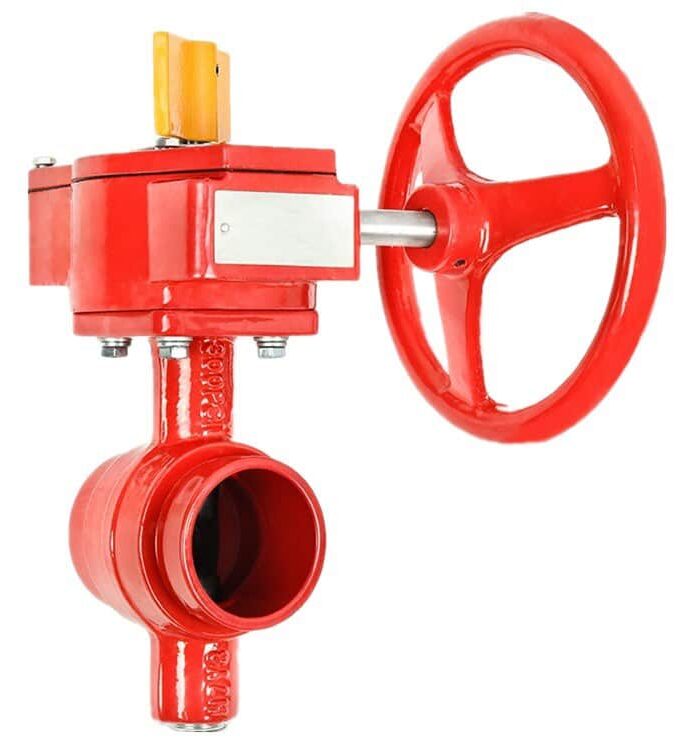
Butterfly valves seal performance is a critical factor in real-world applications, even though it is not always the first parameter considered during selection. Many common site issues—such as incomplete shut-off, ongoing minor leakage, or a gradual decline in sealing performance over time—are closely related to how butterfly valves seal and the design of their sealing structure.
Different types of butterfly valves seal in different ways. Some rely on the elasticity of sealing materials, while others depend on structural design to achieve stable contact. These differences may not be obvious during the selection stage, but they become more apparent over time. For this reason, understanding how butterfly valves seal is essential for improving system reliability and reducing long-term maintenance costs.
Basic Sealing Principle of Butterfly Valves
Butterfly valves achieve sealing through the contact between the disc and the seat, creating a tight closure that prevents fluid from passing through.
Depending on the sealing material and structural design, there are two main sealing approaches:
- Soft sealing: relies on the elastic deformation of materials such as rubber or PTFE. During closing, the seat slightly deforms to conform to the edge of the disc, forming a tight surface contact.
- Metal sealing: relies on precise metal-to-metal contact, typically combined with an eccentric design (especially triple eccentric). In the final stage of closing, a wedge effect creates a narrow, evenly loaded line contact, ensuring a reliable seal.
Types of Butterfly Valve Sealing Structures
From the perspective of sealing pairs, butterfly valves can be classified into soft-seated and metal-seated designs.
From a structural standpoint, they can be further divided into concentric and eccentric types. In practice, these classifications are often combined rather than independent.
Soft-Seated (Resilient)
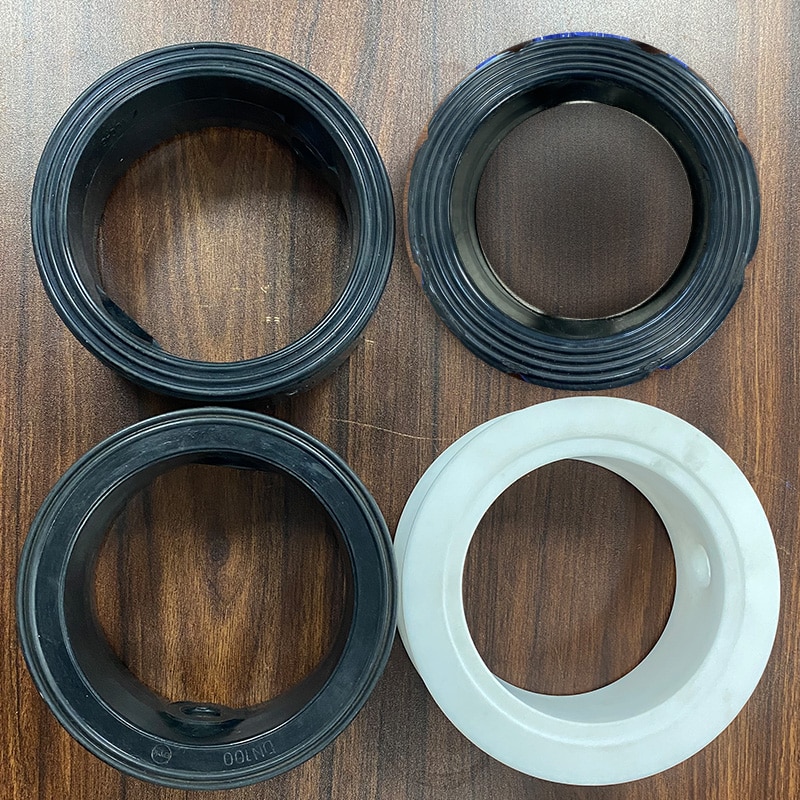
Soft-seated butterfly valves use elastic materials such as rubber or PTFE as the seat. When the valve closes, the disc compresses the seat, causing slight elastic deformation that creates a tight seal—typically achieving bubble-tight (zero leakage) performance.
Common materials include:
- EPDM: suitable for water and HVAC systems, with a temperature range of approximately -40°C to 120°C
- NBR: offers good resistance to oils and fuels, with a temperature range of approximately -30°C to 100°C
- PTFE: provides excellent corrosion resistance, typically suitable for temperatures up to 180°C (depending on valve design)
Notes:
Rubber-based materials are more prone to aging or wear under high temperatures or in media containing particles, so regular inspection or replacement is recommended.

Metal-Seated (High-Temperature)
Metal-seated butterfly valves achieve sealing through direct metal-to-metal contact between the disc and the seat, typically combined with a triple eccentric design. In the final stage of closing, the disc wedges into the seat, creating a stable line-contact seal.
These valves usually use stainless steel or hard alloys (such as Stellite) for the sealing surfaces, making them suitable for high-temperature, high-pressure, or corrosive applications.
Notes:
They require higher machining accuracy, have relatively higher cost, and place greater demands on proper actuator torque control.

Concentric vs Eccentric Design
In a concentric design, the disc is aligned with the center of the seat. Sealing mainly relies on the elastic deformation of the seat material.
This structure is simple and cost-effective, making it suitable for low-pressure and moderate-temperature applications.
Eccentric Butterfly Valve
In eccentric designs, the disc is offset from the seat (single, double, or triple eccentric). This offset reduces friction between the disc and the seat during operation, helping to minimize wear and extend service life.
- Double eccentric: commonly used in medium-pressure and moderate-temperature applications, and can be combined with soft or partial metal sealing
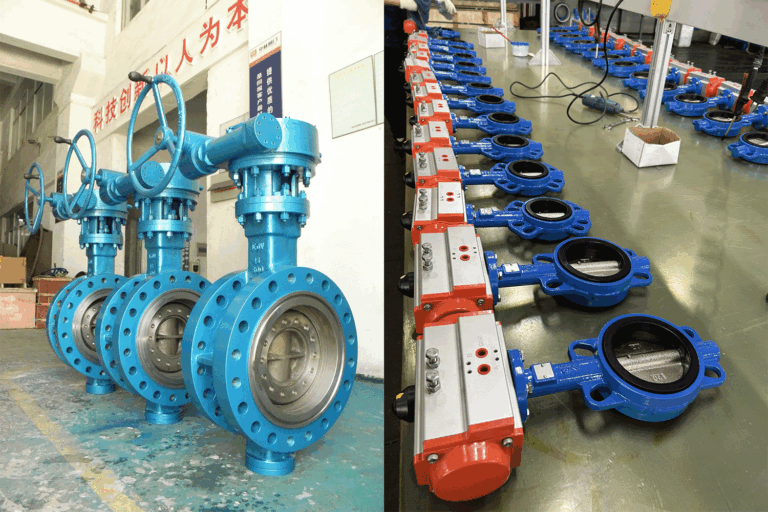
- Triple eccentric: mainly used for high-temperature, high-pressure, and metal-seated applications, and is widely adopted in industrial systems
Key Factors Affecting Sealing Performance
The sealing performance of a butterfly valve is not determined by structure alone. In practice, it is influenced by several key factors:
- Machining accuracy
Geometric precision—such as surface roughness, flatness, and roundness—directly affects how well the sealing surfaces contact each other.
- Material properties
Material characteristics, including hardness, elasticity, wear resistance, corrosion resistance, and temperature tolerance, play a critical role in sealing performance and service life.
- Medium conditions
The temperature, pressure, corrosiveness, and viscosity of the medium can significantly impact the stability and durability of the sealing materials.
- Operating conditions
Frequent operation, opening/closing speed, and system vibration can accelerate wear and aging of the sealing surfaces.
- Installation and maintenance
Proper installation and regular maintenance are essential to ensure consistent sealing performance over time.
Common Sealing Issues and Maintenance Tips
In practice, even with proper selection, butterfly valves may still encounter the following issues:
- Soft seat aging or permanent deformation
Leakage after long-term use is often related to material aging or compression deformation, especially under high temperature or pressure.
Recommendation: Regularly inspect the seat condition. For high-temperature or critical applications, consider eccentric or metal-seated designs.
- Improper installation or stem misalignment
May result in incomplete shut-off or difficult operation.
Recommendation: Ensure proper alignment of the stem during installation, and confirm that the disc contacts the seat evenly without pipeline stress.
- Wear or erosion
High flow velocity or media containing particles can cause wear on the disc and seat, leading to a gradual decline in sealing performance.
Recommendation: Clean the valve and pipeline regularly, and consider adding filtration or flow control measures if necessary.
- Metal seat wear or sticking
In triple eccentric designs, insufficient torque or prolonged operation under high temperature and pressure may lead to wear or sticking of the sealing surfaces.
Recommendation: Ensure proper actuator torque and periodically inspect the metal sealing surfaces.
- Reverse pressure leakage
Some valves may not seal properly when the flow direction is reversed.
Recommendation: Pay attention to flow direction during installation. For critical applications, consider eccentric or triple eccentric designs.
When Should a Butterfly Valve Seat Be Replaced?
In practice, butterfly valve seats do not have a fixed replacement interval. Instead, replacement is usually based on operating conditions. The following signs typically indicate that the sealing performance has declined and inspection or replacement is needed:
- Leakage after the valve is fully closed
- Visible aging or deformation of the seat
- Noticeable changes in operating torque
- Changes in working conditions (such as temperature or media)
The sealing performance of a butterfly valve is not determined by a single factor. It is the result of material selection, structural design, and proper matching with actual operating conditions. Rather than focusing only on price or specifications, a more effective approach is to select the appropriate sealing type and structure based on real application needs, achieving a balance between reliability and cost.
TFW Valve focuses on optimizing sealing structures and material combinations for different applications, including water treatment, HVAC, and industrial piping systems. Whether for standard soft-seated applications or more demanding conditions involving higher temperatures, pressures, or corrosive media, we can provide suitable solutions.
If you are working on a project or facing specific challenges, feel free to reach out and discuss your requirements with us.