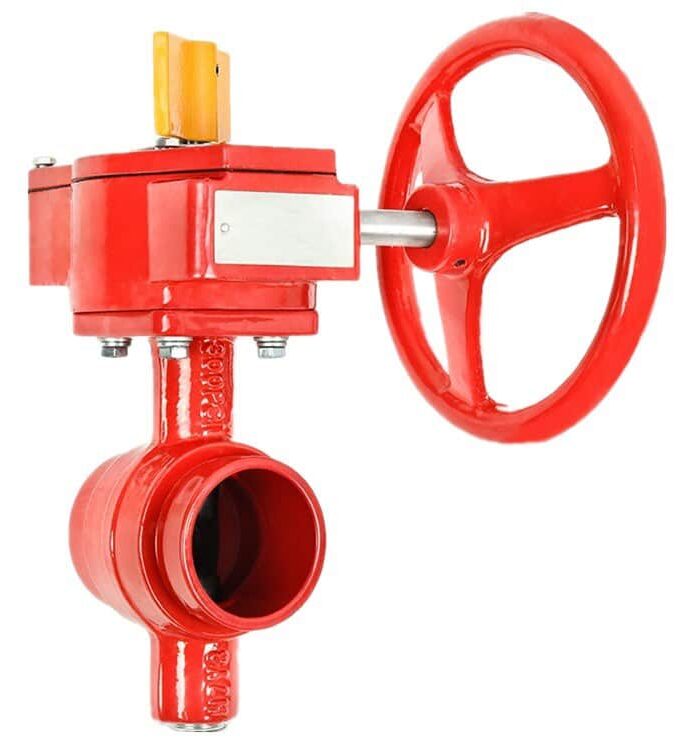
Municipal water supply systems require valves that can operate reliably for many years while handling large flow volumes, frequent pressure changes, and different pipeline conditions. In these systems, butterfly valves are widely used because they provide a compact structure, quick operation, and good cost performance for medium and large diameter pipelines.
However, choosing a butterfly valve for municipal water is not simply a matter of selecting the right size. The valve body material, disc material, seat material, end connection, pressure rating, operation method, and installation position all affect long-term performance. A valve that works well in a small building water line may not be suitable for a transmission main, pump station, or reservoir outlet.
This article looks at how butterfly valves are used in municipal water supply systems, what specifications are usually considered, and how to reduce common problems such as leakage, difficult operation, pressure loss, and premature seat wear.

Why Butterfly Valves Are Common in Municipal Water Systems
In municipal water networks, valves are often installed on pipelines with relatively large diameters. Gate valves are still used in many main lines, especially where full bore flow is required. But for many isolation, regulation, and pump station applications, butterfly valves offer several practical advantages.
The first advantage is the compact structure. A butterfly valve uses a rotating disc to control flow, so the face-to-face dimension is much shorter than many gate valves or globe valves. This helps reduce installation space, especially in valve chambers, pump rooms, and underground pipelines where space is limited.
The second advantage is faster operation. A butterfly valve usually rotates 90 degrees from fully open to fully closed. For large diameter pipelines, this can make operation easier, especially when the valve is equipped with a worm gear, electric actuator, or hydraulic actuator.
The third advantage is cost performance. For medium and large sizes, a butterfly valve usually requires less material than a gate valve of the same nominal diameter. This can reduce valve weight, transportation cost, and installation workload. In projects where many valves are required across a distribution network, this difference can be important.
At the same time, butterfly valves are not suitable for every location. Because the disc remains in the flow path even when the valve is fully open, there will be some pressure loss. In addition, soft-seated butterfly valves must be selected carefully when the water contains sand, sediment, or high levels of suspended solids. For this reason, the application conditions should always be reviewed before final selection.
Typical Applications in Municipal Water Supply
Municipal water supply is not a single operating condition. A city water system may include raw water intake, treatment plant pipelines, clean water reservoirs, transmission mains, pumping stations, distribution networks, and branch lines. Butterfly valves may be used in several of these areas, but the design requirements are not always the same.
Water Treatment Plant Pipelines
In water treatment plants, butterfly valves are commonly used for inlet and outlet pipelines, filter systems, backwash lines, and process water control. These applications often require frequent operation, stable sealing, and good corrosion protection. Ductile iron body valves with epoxy coating are commonly selected for clean water and treated water service.
For treatment plants, the seat material is also important. EPDM is widely used for potable water and general clean water because it has good resistance to water, aging, and many common treatment chemicals. If the system contains special chemicals or higher temperature conditions, the seat material should be checked more carefully.
Pump Stations
Pump stations are one of the most important locations for valve selection. Butterfly valves may be installed on suction lines, discharge lines, bypass lines, and isolation sections. The valve must be easy to operate and strong enough to handle pressure changes during pump start and stop.
In pump discharge pipelines, the butterfly valve is often used together with a silent check valve, swing check valve, or other non-return valve to prevent backflow. If the pump stops suddenly, water hammer can occur. For this reason, the valve closing speed and actuator control should be considered carefully. TFW has discussed this issue in more detail in the article How to Prevent Water Hammer in Cooling Systems, and many of the same principles also apply to municipal pump stations.
Reservoir and Tank Outlet Lines
Butterfly valves are also used on reservoir outlet lines, tank inlet lines, and large clean water storage systems. These valves may remain open for long periods and then need to close reliably when maintenance is required. For this kind of application, long-term seat compression and corrosion protection should be considered.
If a valve is rarely operated, the operator may only discover a problem after years of service. A stuck gearbox, aged rubber seat, or corroded stem can make field operation difficult. This is why municipal water projects should not only consider the purchase price of the valve, but also the ease of future inspection and maintenance.
Distribution Network Isolation
In city distribution networks, valves are installed to divide the system into zones. When a pipeline section needs repair, the valve should isolate the area without shutting down a much larger part of the network. Butterfly valves can be used for many isolation points, especially in larger diameter pipelines where compact size and lower weight are useful.
For buried or chamber installations, the operating method must be selected according to access conditions. Manual lever operation is usually not suitable for large diameter municipal valves. Worm gear operation is more common, while electric actuators may be selected for remote operation or SCADA-controlled systems.
Key Selection Factors for Municipal Butterfly Valves
A municipal water butterfly valve should be selected based on actual working conditions rather than only nominal diameter. The following points are usually reviewed during engineering or procurement.
1. Valve Type and End Connection
Common butterfly valve connection types include wafer, lug, U-type, and double flanged designs. Each type has different installation characteristics.
Wafer butterfly valves are compact and economical. They are installed between two pipe flanges using long bolts. They are widely used in building systems, HVAC water systems, and some municipal auxiliary lines. However, for some buried pipelines or heavy-duty municipal projects, engineers may prefer flanged or lug designs because they provide more stable connection support.
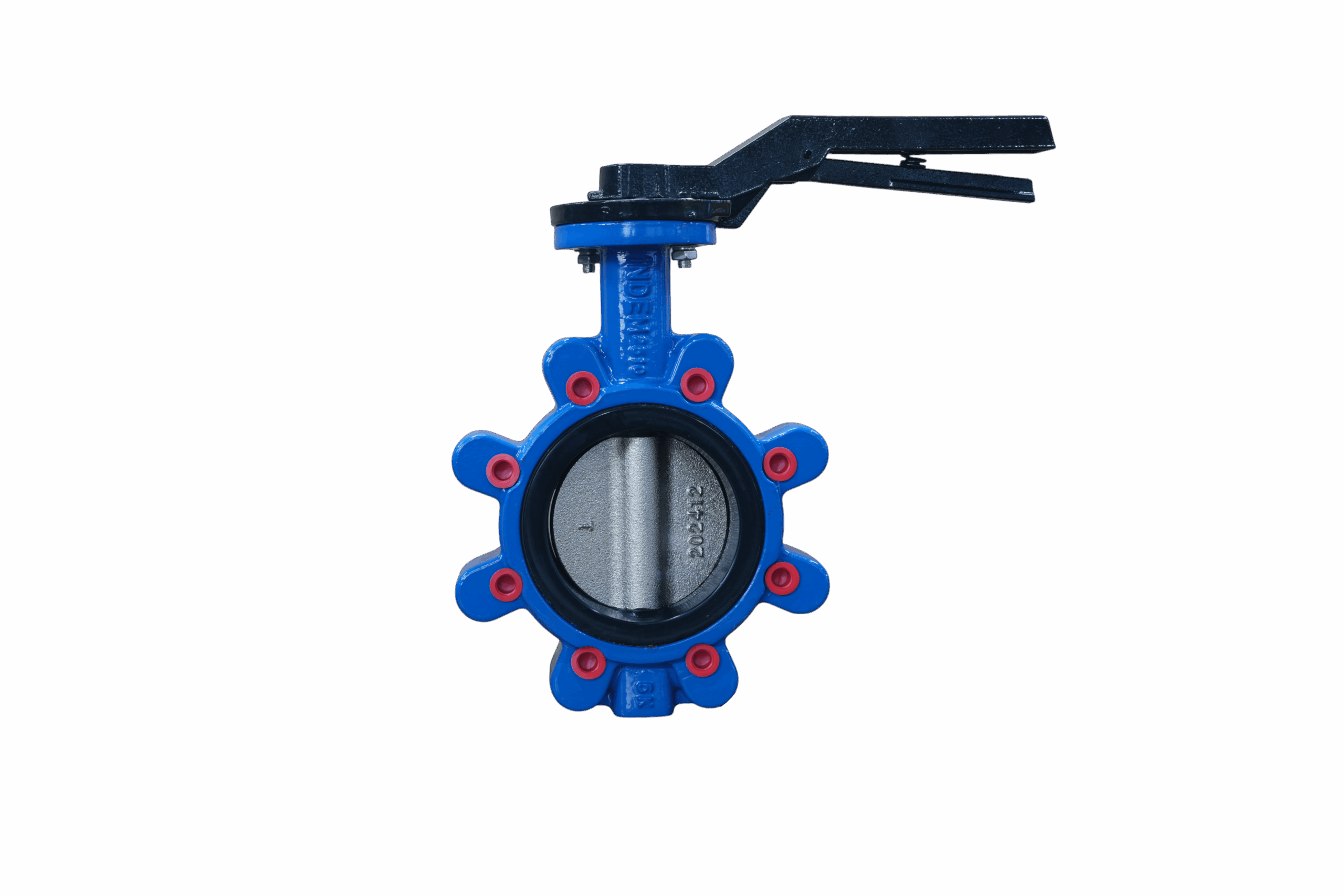
Lug butterfly valves have threaded lugs around the body. They can be bolted from both sides and may allow one side of the pipeline to be removed depending on system design and pressure conditions. This can be useful in maintenance sections.
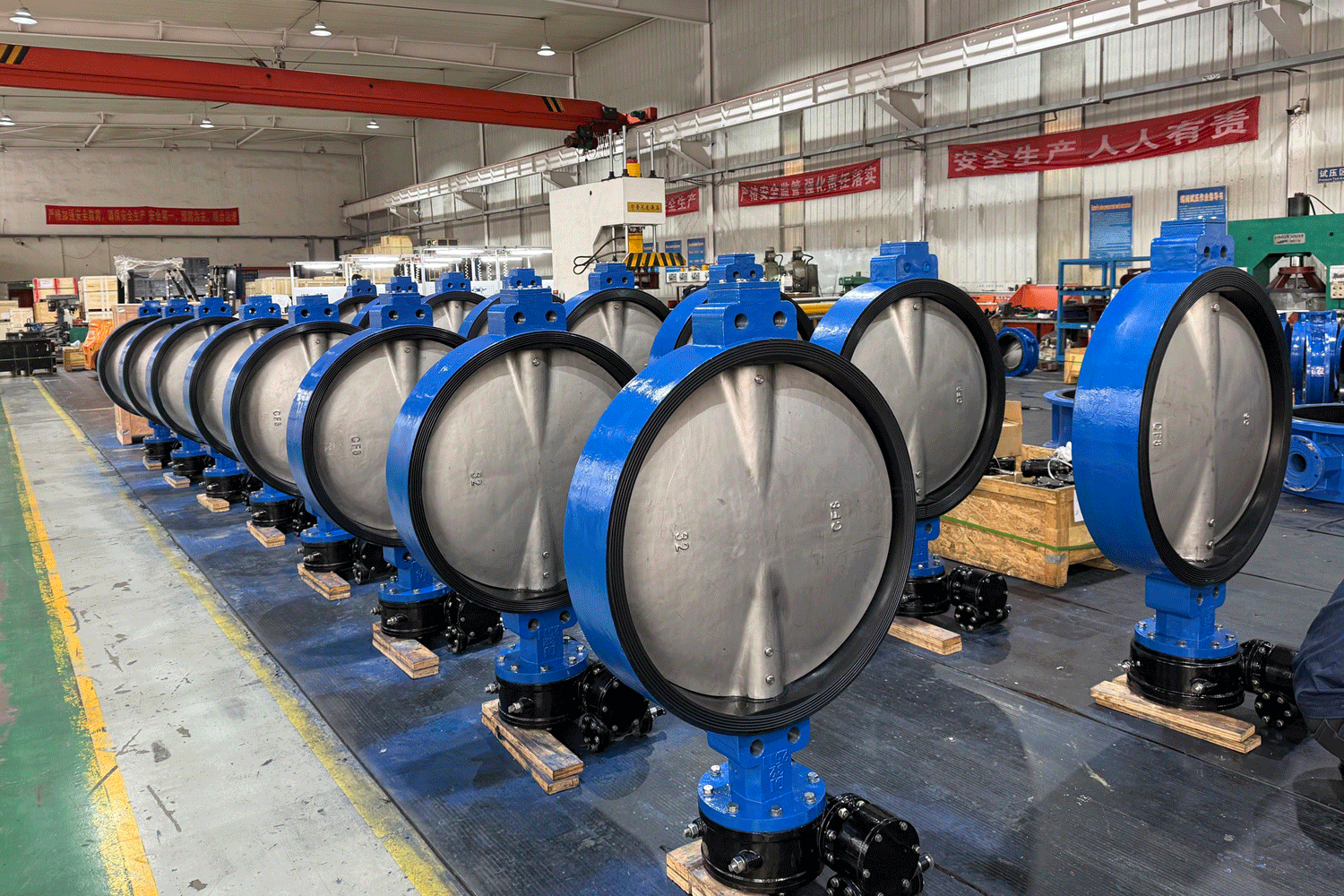
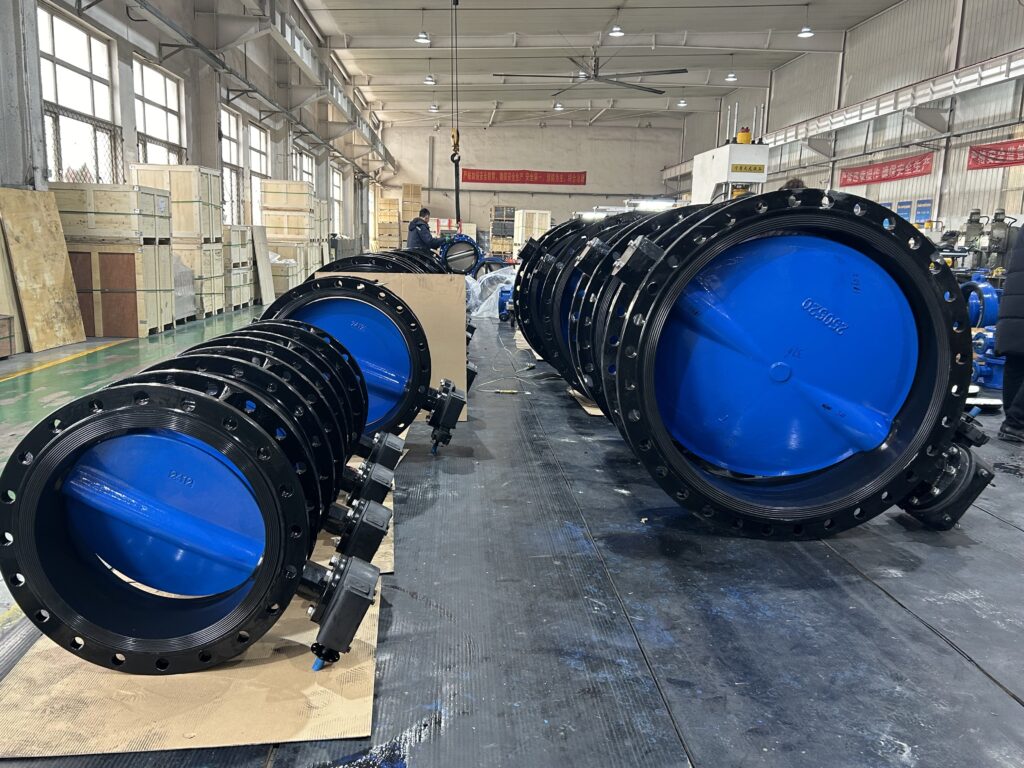
Double flanged butterfly valves are commonly used in larger municipal pipelines, water treatment plants, and pump stations. They offer a more robust connection and are often preferred where pipeline loads, vibration, or installation stability are important.
2. Pressure Rating
Municipal water pipelines commonly use pressure classes such as PN10, PN16, or Class 150, depending on regional standards and project requirements. The pressure rating should not be selected only according to normal working pressure. Surge pressure, pump shutoff pressure, elevation difference, and possible water hammer should also be considered.
For example, a distribution pipeline may operate at a normal pressure below PN10, but if pump operation creates pressure surges, a higher pressure rating may be safer. Engineers should confirm both working pressure and test pressure before final selection.
3. Body Material and Coating
Ductile iron is one of the most common body materials for municipal water butterfly valves. Compared with cast iron, ductile iron has better strength and toughness, making it more suitable for pressure-bearing water systems. For clean water and potable water service, fusion bonded epoxy coating or other protective coating is often applied to improve corrosion resistance.
Carbon steel and stainless steel may be used in special industrial water systems, but for ordinary municipal water, ductile iron usually provides a good balance between strength, durability, and cost. When seawater, brackish water, or highly corrosive water is involved, stainless steel or aluminum bronze components may need to be considered.
4. Disc Material
The disc is always in direct contact with the water, so its material affects corrosion resistance and sealing performance. Common options include ductile iron with coating, stainless steel 304, stainless steel 316, and aluminum bronze.
For standard clean water systems, ductile iron disc with epoxy coating or stainless steel disc can both be used depending on project budget and service conditions. For more corrosive water or coastal municipal projects, SS316 or aluminum bronze may provide better long-term performance.
5. Seat Material
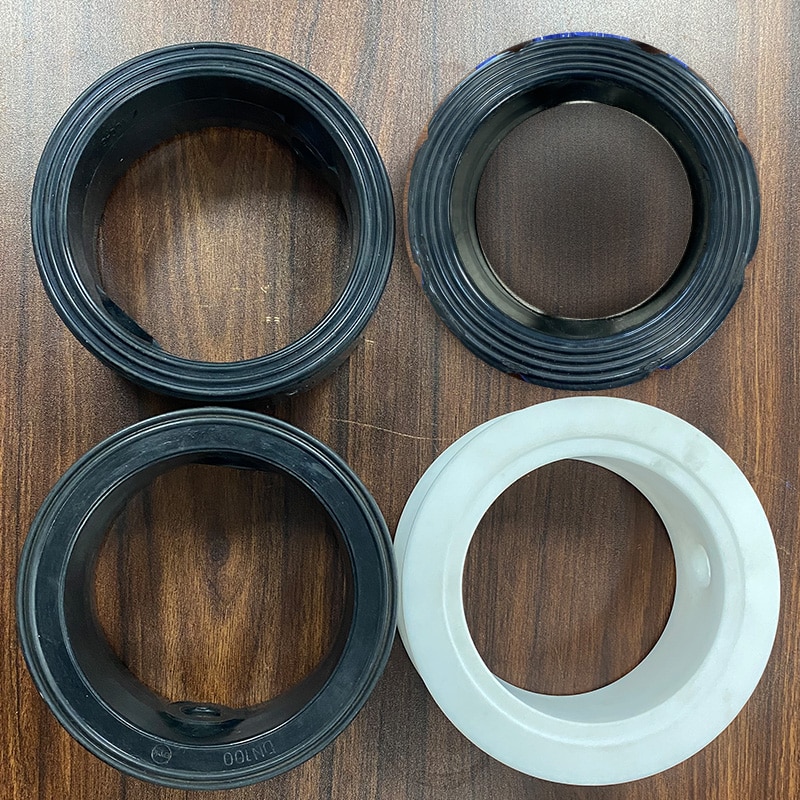
For soft-seated butterfly valves in municipal water systems, EPDM is usually the first material to consider. It performs well in water service and has good resistance to aging. NBR may be used where oil resistance is needed, but it is not the usual first choice for potable water. PTFE has good chemical resistance but is less elastic than rubber seats and is more often selected for chemical or special media conditions.
Incorrect seat selection can lead to leakage, swelling, hardening, or reduced sealing performance. TFW has covered this issue in more detail in How Do Butterfly Valves Seal? Types and Solutions and Common Butterfly Valve Leakage Problems and How to Fix Them.
6. Operation Method
Small butterfly valves may use a handle, but municipal water valves are often too large for simple lever operation. Worm gear operation is commonly used because it reduces operating torque and allows more controlled opening and closing. For remote control, electric actuators, pneumatic actuators, or hydraulic actuators may be used.
For pump stations and automated water networks, actuator closing time should be reviewed carefully. A valve that closes too quickly can contribute to water hammer. A valve that closes too slowly may not meet system control requirements. The correct solution depends on pipeline length, flow velocity, pump characteristics, and control philosophy.
Installation Points That Affect Long-Term Performance
Even a correctly selected valve can have problems if it is installed incorrectly. Many butterfly valve issues in water systems are related to installation rather than manufacturing defects.
Check Flange Compatibility
Before installation, the flange standard, bolt hole arrangement, gasket surface, and face-to-face dimension should be confirmed. Common flange standards include EN, DIN, ANSI, JIS, and AS. If the flange drilling does not match the valve body, forced installation can damage the valve or create leakage at the flange connection.
Keep the Disc Clear During Installation
The disc of a butterfly valve rotates inside the pipeline. During installation, there must be enough clearance for the disc to open fully without contacting the pipe, flange, gasket, or lining. This is especially important for wafer butterfly valves and lined piping systems.
Avoid Excessive Pipe Stress
The valve should not be used to correct pipe misalignment. If the pipeline is not properly supported, excessive stress may be transferred to the valve body and flange connection. Over time, this can cause leakage, difficult operation, or damage to the seat.
Flush the Pipeline Before Operation
Municipal pipelines may contain welding slag, sand, stones, or construction debris before commissioning. If these particles pass through the valve during operation, they can scratch the seat or disc sealing surface. Flushing the pipeline before final operation is a simple but important step.
Common Problems in Municipal Butterfly Valve Applications
In actual water projects, butterfly valve problems are usually caused by a combination of selection, installation, and maintenance factors. The following issues are commonly seen.
Internal Leakage
Internal leakage means water continues to pass through the valve after it is fully closed. This may be caused by seat wear, disc damage, debris trapped at the sealing surface, incorrect seat material, or incomplete closing due to actuator adjustment problems.
In municipal systems, internal leakage may not always be noticed immediately because the pipeline remains pressurized. It often becomes visible during repair work when the isolated section cannot be drained properly.
External Leakage
External leakage may occur at the flange connection, stem area, or body joint. Flange leakage is often related to gasket selection, bolt tightening sequence, flange misalignment, or pipe stress. Stem leakage may be related to packing wear or long-term operation under unsuitable conditions.
Difficult Operation
If a butterfly valve becomes difficult to operate, possible causes include gearbox damage, stem corrosion, seat deformation, debris accumulation, or excessive differential pressure. For large diameter municipal valves, operators should avoid using excessive force without checking the cause, because this may damage the gearbox or stem.
Water Hammer and Vibration
Fast valve closing, pump shutdown, backflow, and high flow velocity can all contribute to water hammer. In pump stations and long transmission mains, this issue should be evaluated during the design stage. Valve closing time, check valve type, air release valves, surge vessels, and control logic may all be part of the solution.
Procurement Checklist for Municipal Water Projects
When requesting a quotation for butterfly valves used in municipal water supply systems, it is helpful to provide complete information. This reduces misunderstanding and helps the manufacturer recommend the correct configuration.
- Nominal diameter, such as DN200, DN500, or DN1200
- Pressure rating, such as PN10, PN16, or Class 150
- Connection type, such as wafer, lug, U-type, or double flanged
- Flange standard, such as EN 1092-2, ANSI B16.5, JIS 10K, or AS2129
- Medium, such as raw water, treated water, potable water, or seawater
- Working temperature and normal operating pressure
- Body, disc, stem, and seat material requirements
- Operation method, such as handle, worm gear, electric actuator, or hydraulic actuator
- Coating requirements, especially for ductile iron valves
- Certification or testing requirements, such as pressure test reports or material certificates
Providing these details at the beginning helps avoid a common problem in valve procurement: several suppliers may quote valves with the same size, but with very different materials, seat types, flange standards, and testing levels. This is one reason why butterfly valve prices can vary significantly. For more information, you can also read What Affects Butterfly Valve Price?.
When to Use Gate Valves or Check Valves Together
A municipal water system usually does not rely on only one type of valve. Butterfly valves, resilient seated gate valves, check valves, pressure reducing valves, air release valves, and strainers may all be used in different positions.
Gate valves are often selected where a full bore opening is preferred and pressure loss must be minimized. Check valves are used to prevent reverse flow, especially near pump discharge lines. Pressure reducing valves may be used in distribution networks where pressure zones need to be controlled.
Butterfly valves are usually selected when compact size, fast operation, and good cost performance are important. In many pump stations, a butterfly valve may be installed as an isolation valve while a check valve handles backflow prevention. Selecting these valves as a system, rather than as separate components, leads to more reliable operation.
Conclusion
Butterfly valves play an important role in municipal water supply systems, especially in water treatment plants, pump stations, reservoirs, transmission lines, and distribution networks. Their compact structure, relatively low weight, quick operation, and competitive cost make them suitable for many medium and large diameter water pipeline applications.
At the same time, correct selection is essential. Engineers and buyers should review the valve type, pressure rating, body material, disc material, seat material, coating, operation method, and installation conditions before placing an order. For clean municipal water, ductile iron body valves with EPDM seats are commonly used, while special water conditions may require stainless steel, aluminum bronze, PTFE, or other material options.
For municipal water projects, TFW Valve can provide different butterfly valve configurations, including wafer, lug, U-type, double flanged, soft-seated, and eccentric butterfly valve designs. If you are selecting valves for a water treatment plant, pump station, or city water distribution pipeline, you can review our butterfly valve products or contact us with your project specifications.