In real project procurement, many buyers face the same issue:
butterfly valves with the same specifications can vary significantly in price between suppliers—sometimes by several times.
This difference is not simply due to brand or market factors. It is mainly driven by variations in materials, design, manufacturing processes, and configuration requirements.
Understanding these key factors helps you control costs more effectively while avoiding potential risks during long-term operation.
Valve Body and Internal Materials
Among all factors, materials have the most direct and noticeable impact on price differences.
Body Material
The valve body is the main pressure-bearing component of a butterfly valve. Material selection typically depends on the pressure rating and the operating environment.
Common materials include:
- Cast Iron
- Ductile Iron
- Carbon Steel (WCB)
- Stainless Steel (SS304 / SS316)
- Duplex Stainless Steel
Performance and cost considerations:
- Cast Iron → Lowest cost, but relatively low strength and toughness
- Ductile Iron → Significantly improved strength with good cost performance; widely used in water systems
- Carbon Steel (WCB) → Higher strength, suitable for higher pressure or industrial applications
- Stainless Steel → Good corrosion resistance, suitable for corrosive media, with a noticeable cost increase
- Duplex Stainless Steel → Combines high strength and excellent corrosion resistance; ideal for seawater and demanding environments, with the highest cost
Price trend:
Cast Iron < DI < WCB < SS < Duplex
Disc Material
The disc is in direct contact with the media and plays a key role in corrosion resistance and wear performance.
Common materials:
- Ductile Iron with protective coating
- Stainless Steel 304 / 316
- Aluminum Bronze
- Duplex Stainless Steel
Performance and cost considerations:
- Coated Ductile Iron → Lowest cost, suitable for general water applications
- Stainless Steel 304 / 316 → Improved corrosion resistance
- Aluminum Bronze → Excellent resistance to seawater corrosion
- Duplex Stainless Steel → Combines high strength and strong corrosion resistance; suitable for demanding conditions, with the highest cost
Price trend:
Coated DI < Stainless Steel < Aluminum Bronze < Duplex
Engineering insight:
In seawater systems, aluminum bronze discs are often more stable than standard stainless steel, which is one of the key reasons for the higher cost.

Seat Material
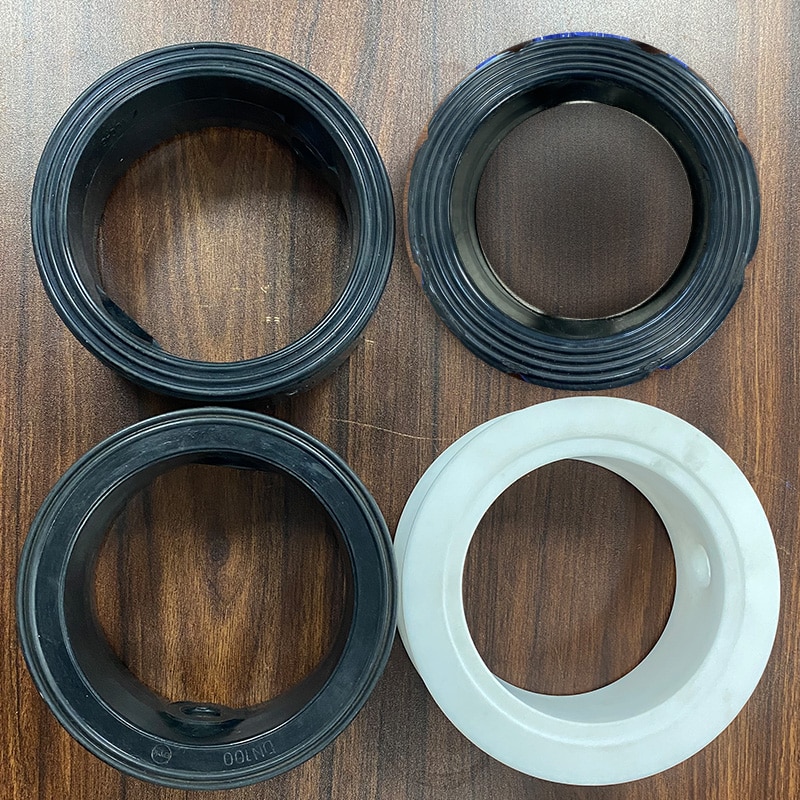
The seat material directly affects sealing performance and service life.
Common types:
- EPDM
- NBR
- PTFE
- Metal Seat
Performance and application considerations:
- EPDM → Stable overall performance; the most commonly used option in water systems
- NBR → Suitable for oil-containing or hydrocarbon media
- PTFE → Excellent corrosion resistance, ideal for highly corrosive environments
- Metal Seat → Designed for high temperature, high pressure, and particulate media; more complex to manufacture and the most expensive
Price trend:
EPDM < NBR < PTFE < Metal Seat
Shaft Material
The shaft is the key transmission component that connects the actuator to the disc, directly affecting operating stability and service life.
Common materials:
- Nickel-plated Carbon Steel
- Stainless Steel 410 / 420
- Stainless Steel 304 / 316
Performance and cost considerations:
- Nickel-plated Carbon Steel → Lowest cost, but limited corrosion resistance; relies on surface coating for protection
- Stainless Steel 410 / 420 → High strength and good wear resistance, but moderate corrosion resistance
- Stainless Steel 304 / 316 → Excellent corrosion resistance, suitable for water and corrosive environments, with higher cost
Price trend:
Carbon Steel < 410/420 < 304/316
Design & Specification
Valve Type
DN Size
As the valve size increases, the cost does not grow linearly. Instead, it shows a clear non-linear increase.
Size and cost characteristics:
- DN100 and below → Simple structure, mature manufacturing, and relatively controlled cost
- DN500 and above → Significant increase in material usage, along with higher machining and assembly requirements
- DN1000 and above → Typically considered large equipment, with higher demands on casting, machining, and transportation
Pressure Rating (PN / Class)
As the pressure rating increases, requirements for structural design, material thickness, and machining precision also increase, leading to higher overall cost.
Common pressure ratings:
- PN10 / PN16 (commonly used in European and general water systems)
- Class 150 / Class 300 (commonly used in ANSI/ASME systems)
Pressure and cost considerations:
- Lower pressure ratings (e.g., PN10 / Class 150) → Simpler structure and lower cost
- Medium to higher pressure ratings (e.g., PN16 / Class 300) → Thicker valve body, higher strength requirements, and noticeably higher cost
Manufacturing & Configuration
Actuation / Operator Type
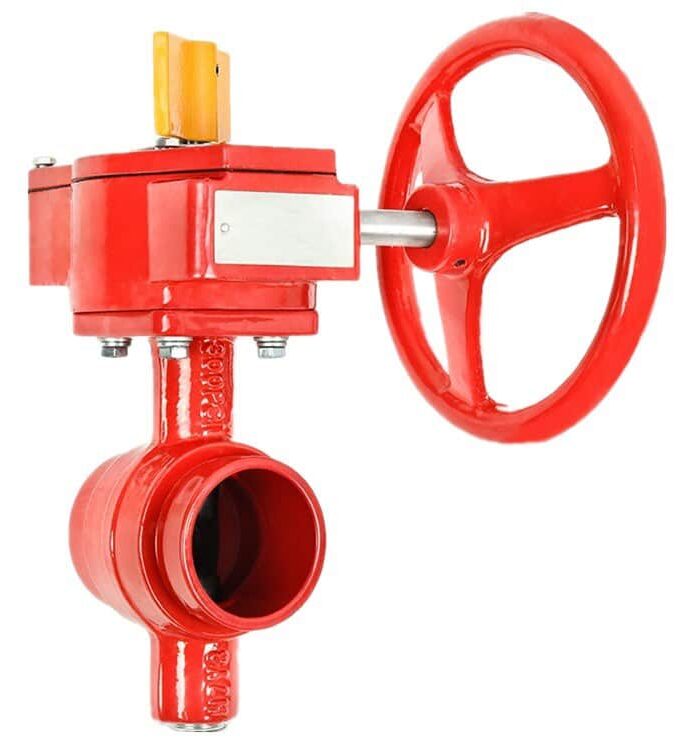
In many projects, the actuator itself can account for a significant portion of the total valve cost.
Common types:
- Lever
- Gearbox
- Electric Actuator
- Pneumatic Actuator
Function and cost considerations:
- Lever → Simplest structure with the lowest cost; suitable for small-size valves
- Gearbox → Provides higher operating torque; suitable for medium to large sizes, with moderate cost
- Electric Actuator → Enables remote control and automation; significantly increases cost
- Pneumatic Actuator → Fast response and suitable for automated systems; relatively higher cost

Manufacturing Process
In many cases, even when the materials are the same, price differences between suppliers mainly come from variations in manufacturing processes and quality control.
Casting Quality
- Standard casting → Lower cost, but may have defects such as porosity or shrinkage
- High-quality casting → Denser structure with more stable mechanical performance
Machining Accuracy
Critical areas include:
- Sealing surfaces
- Seat positioning
- Shaft fitting areas
Machining levels:
- Rough machining → Lower cost, but less reliable sealing performance
- Precision machining (CNC) → Higher accuracy and more reliable sealing
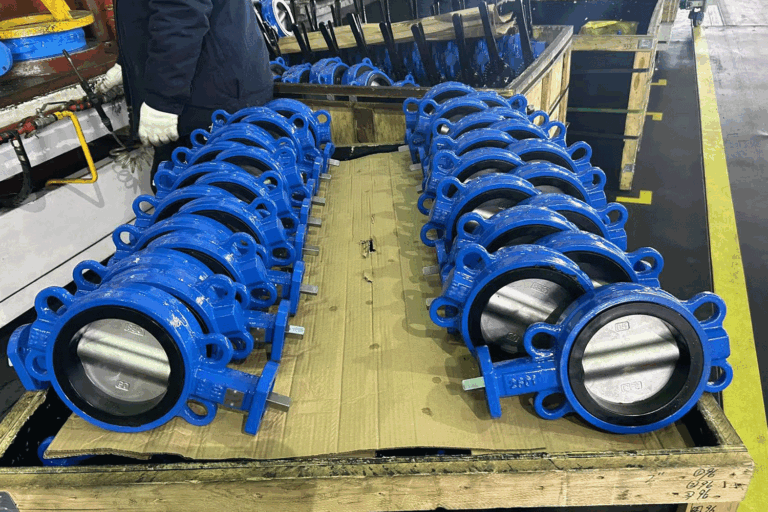
As shown in the images, the differences in machining processes on the shaft are quite visible, which directly reflect variations in precision and manufacturing complexity.

Seat Processing
For soft-seated butterfly valves in particular:
- Fully vulcanized rubber seat → Higher cost, but more stable sealing performance
- Simple insert-type seat → Lower cost, but more likely to loosen or leak over long-term use

Coating
- Standard paint coating → Lower cost
- Epoxy powder coating (200–300 μm) → Standard configuration
- Heavy-duty / multi-layer coating systems → Higher cost
For the same valve specification, the “right configuration” can vary depending on the actual working conditions. Focusing too much on minimizing upfront cost may lead to higher maintenance and replacement expenses later on. A well-matched selection, on the other hand, helps reduce overall system risk throughout the valve’s service life.
Based on different application requirements, TFW Valve has built solid experience in water treatment, HVAC, and industrial systems, and can provide more tailored configuration solutions.
If you have a specific project or need technical confirmation, feel free to get in touch.