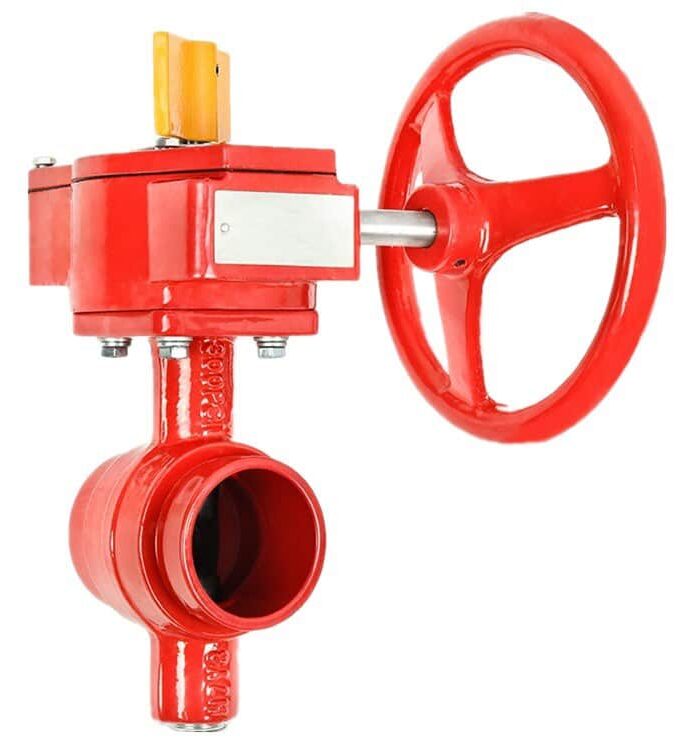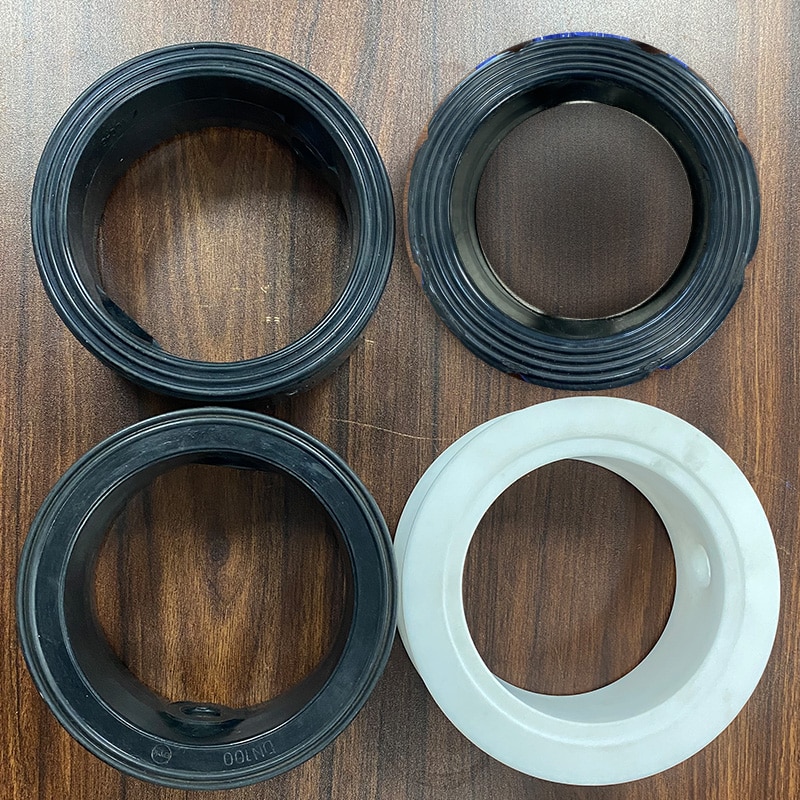
Choosing the right butterfly valve is important, but it’s only the first step.
The connection type—how the valve is actually installed into the pipeline—plays a critical role in system safety, cost, and long-term reliability. Pick the wrong connection, and the result can be leakage, mechanical failure, or costly downtime.
This guide simplifies the decision-making process. We break down the four major butterfly valve connection types—wafer, lug, semi-lug, and double-flanged—so you can choose with clarity and confidence.
Why the Connection Type Matters
A butterfly valve doesn’t just open and close. It must also stay securely fixed within the system. Each connection type behaves differently in terms of load distribution, installation requirements, and maintenance needs. As a result, their safety performance and total cost can vary dramatically.
- Structural Integrity
Connection points are often the weakest part of a pipeline. Selecting the wrong connection type can lead to valve displacement under pressure, temperature changes, vibration, or soil settlement—potentially causing leaks or even catastrophic failure.
- Sealing Reliability
Different connection types provide different levels of clamping force and sealing security. A poor match can lead to persistent leakage—wasting media and creating serious safety risks, especially in toxic or flammable applications.
- Load Bearing and Support
Some designs (such as wafer-style) cannot support the weight of the pipeline and require additional external supports. Others (like lug-style) can bear load independently.
- Overall Cost
Initial Cost:
- In general, Wafer < Semi-Lug < Lug < Double-Flanged.
- Simpler designs require less material and are therefore cheaper.
Lifecycle Cost:
The lowest purchase price does not always mean the lowest total cost. Installation time, fastening hardware, maintenance requirements, and potential downtime from valve replacement all contribute to the real expense of a connection choice.
Overview of the Four Butterfly Valve Connection Types

Wafer Butterfly Valve (Wafer-Type Connection)
Structural Features:
A wafer butterfly valve is clamped between two pipe flanges using long through-bolts. The body has no bolt holes of its own, meaning it relies entirely on the upstream and downstream flanges to hold it in place and provide support.
Advantages:
- Compact and simple design
- Minimal installation space required
- Most economical option among all connection types
Limitations:
- Cannot isolate flow from one side; both flanges must be present
- Cannot support pipeline weight and requires external pipe support
- Installation and removal require loosening long bolts across the entire assembly
Best Applications:
- Projects where cost and space efficiency matter
- Low- to medium-pressure water or air pipelines
- Straight pipeline sections where single-sided removal isn’t needed
- HVAC, water treatment, and other low-risk media transport systems
Semi-Lug Butterfly Valve (Semi-Lug Connection)
Structural Features:
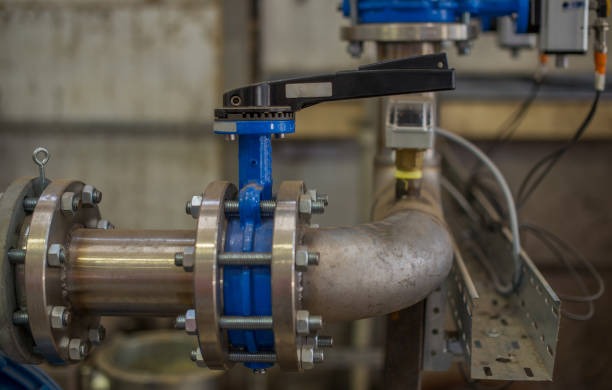
A semi-lug valve looks similar to a lug-style body, but the lugs are through-holes rather than threaded holes.
Because the bolts must pass through both flanges and the valve body, the installation method is still fundamentally the same as a wafer-style connection.
Advantages:
- Easier alignment during installation compared to a standard wafer valve
- Slightly better rigidity due to the added lug structure
Limitations:
- Cannot isolate one side of the line
- Despite looking like a lug valve, it still depends on both flanges for support
- Not suitable for any application requiring one-sided pressure or isolation
Best Applications:
- Projects where better alignment and smoother installation are desired compared to wafer type
- General industrial pipelines such as cooling water or low-pressure air
- Systems with moderate space but no need for single-sided removal
Summary:
Semi-lug valves are essentially an upgraded wafer version. They offer a better installation experience and improved rigidity, but their pressure-bearing capability remains the same as a wafer valve—making them unsuitable for isolation or live-line maintenance.
Lug Butterfly Valve (Lug-Type Connection)
Structural Features:
- A lug-style butterfly valve has threaded inserts or through-holes on both sides of the body.
- Each lug contains a bolt hole that allows the valve to be mounted to the upstream and downstream flanges independently using short bolts.
- Because each flange connects directly to the valve body, the valve can hold pressure from one side without relying on both flanges clamping together.
Key Advantage: One-Sided Isolation
This is the defining strength of a lug-type butterfly valve.
Example:
Consider a cooling water system where the downstream piping needs to be removed for cleaning while the upstream side is still under pressure.
A wafer valve cannot do this safely. Once the downstream flange is removed, the valve loses its clamping force and may be pushed out by upstream pressure—creating a major safety hazard.
A lug valve, however, is securely anchored to the upstream flange using short bolts. Even if the downstream line is completely removed, the valve stays firmly in place and holds pressure from the upstream side, ensuring worker safety during maintenance.
Limitations:
- Higher cost compared to wafer-style valves
- More complex structure and slightly heavier body
Where Lug-Type Valves Are Required
- Pipe Ends or Equipment Inlets
When the valve’s downstream side connects to a hose, tank, or equipment, and must safely withstand pressure from one direction.
- Systems Requiring On-Line Maintenance or Isolation
For example: bypass loops, heat exchanger inlets, and pump suction/discharge lines—where one side may need maintenance while the other remains pressurized.
- Vertical Pipeline Installations
When the downstream piping is removed, the valve must remain securely fixed and capable of supporting pressure or weight from above.
Flanged Butterfly Valve (Flanged Connection)
Structural Features:
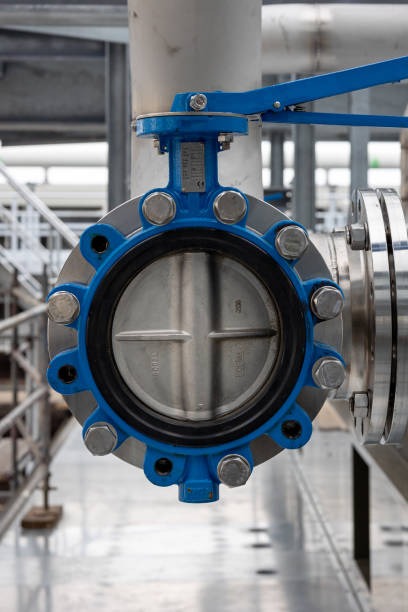
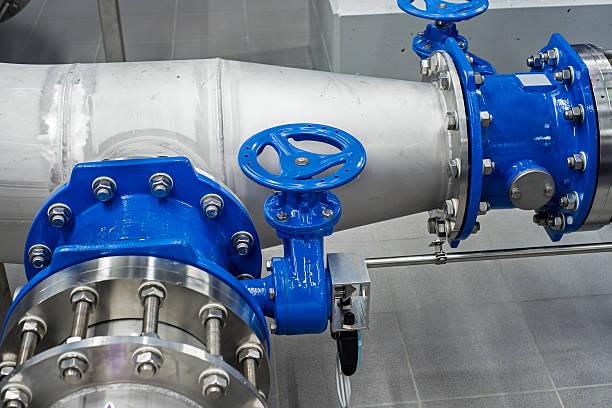
A flanged butterfly valve has full flanges integrated into both sides of the valve body. The valve connects to the pipeline using short bolts that fasten directly to the pipe flanges, creating a stable and rigid assembly.
Advantages:
- Ideal for large-diameter pipelines
- Excellent resistance to vibration and external forces
- Provides the most stable connection among all butterfly valve types
- Handles bending stress, pipeline movement, and water hammer effectively
In large pipeline systems—typically DN600 and above—the weight of the pipe, fluid mass, and thermal expansion can generate significant ongoing stress.
A double-flanged body, with its thicker structure and fully integrated flanges, forms a high-rigidity connection that distributes these stresses evenly across the valve. This helps maintain the shape of the valve seat and ensures long-term sealing performance.
Limitations:
- Highest overall cost
- Larger and heavier body
- Requires more installation space compared to wafer, semi-lug, and lug types
Frequently Asked Questions (FAQ)
What is the difference between wafer and lug butterfly valves?
Wafer valves require bolts running across both flanges and cannot isolate pressure on one side, while lug valves can be safely used for single-side isolation because they bolt independently to each flange.
When should double flanged butterfly valves be used?
They are ideal for large-diameter pipelines, high vibration, water hammer, and high-pressure or corrosive service.
Can semi-lug butterfly valves isolate pressure on one side?
No. Despite the lugs, they still require bolts across both flanges and cannot safely isolate downstream piping.
Are wafer butterfly valves safe for pump outlets?
No. Wafer valves should never be used where single-side isolation is required.
Choosing the right butterfly valve connection is essential for system safety, long-term reliability, and maintenance efficiency. Understanding the differences between wafer, semi-lug, lug, and flanged designs ensures you can select the safest and most cost-effective option for your pipeline.
If you need guidance for your specific operating conditions, TFW Valve is here to help.
We provide reliable engineering support and a full range of high-performance butterfly valves to keep your system running safely and smoothly.