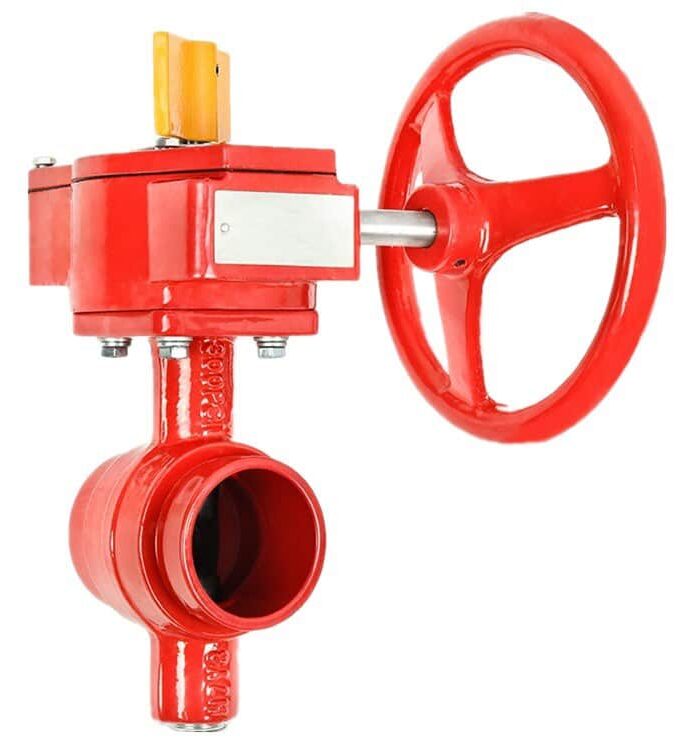
When budgets tighten and installation space becomes increasingly limited, engineers and procurement teams face a familiar challenge: finding a valve that delivers reliable flow control without pushing costs—or footprints—beyond what a project can accept.
In many cases, the butterfly valve strikes that balance better than almost any other option.
While it’s not a universal solution, the butterfly valve excels in a wide range of applications—from fire protection systems and shipbuilding to high-efficiency industrial processes. Thanks to its simple quarter-turn operation, it has become a core component in modern fluid control systems.
This article breaks down the fundamental roles of butterfly valves and explores how they are used across major industries, helping you make more informed and confident selection decisions.
What Does a Butterfly Valve Actually Do?
At its core, a butterfly valve performs three key functions within a piping system:
- On/Off Isolation
This is the most common use case. A 90° rotation of the handle or actuator quickly opens or closes the flow path. The simplicity of this mechanism makes butterfly valves ideal for routine operations as well as emergency shut-off situations.
- Flow Regulation
A butterfly valve doesn’t have to sit fully open or fully closed. The disc can be positioned at any angle in between, allowing operators to adjust flow and pressure to a certain degree. This makes it suitable for moderate throttling applications—though, as we’ll discuss later, there are limits depending on valve type and system conditions.
- Flow Diversion
In multi-port configurations, a butterfly valve can redirect flow from one pipeline to another. Although less commonly required, this function is useful in certain process systems.

Common Application Areas of Butterfly Valves
Application Area | Typical Uses | Key Advantages |
Water Treatment & Municipal Networks | Isolation and flow control in water supply lines, drainage pipelines, and wastewater treatment systems. | Simple structure, reliable sealing, suitable for high-flow systems. |
Industrial Pipelines | Process pipelines conveying water, air, oils, or chemical media. | Corrosion-resistant, cost-effective, ideal for medium-pressure and large-diameter applications. |
Marine & Offshore Applications | Seawater cooling circuits, ballast water management, engine-room supply and discharge lines. | Compact and lightweight, excellent corrosion resistance, ideal for space-restricted environments. |
HVAC Systems | Flow balancing and regulation in cooling towers, chilled-water loops, and heating systems. | Fast actuation, automation-ready, easy to maintain. |
Fire Fighting Systems | Controlling and isolating water supply branches in fire tanks, sprinkler networks, and pump rooms. | Quick opening/closing, compact design, supports supervisory signal devices for remote monitoring. |
Can a Butterfly Valve Be Used for Throttling?
Yes, it can—but only under the right operating conditions.
While a butterfly valve cannot match the throttling precision of a globe valve, it performs very well in medium- and low-pressure systems where moderate flow control accuracy is acceptable.
However, there are a few important limitations to keep in mind:
- Cavitation & Erosion Risks
When a butterfly valve operates at small openings under a high pressure differential, the fluid velocity increases sharply. This can lead to cavitation and eventually cause wear on the disc and seat. Continuous operation in such conditions is not recommended.
- Disc Characteristics
A standard butterfly disc does not provide a linear flow curve. If your system requires precise and stable control, a dedicated control valve is the more appropriate choice.
- Actuator Selection
For applications that require consistent and accurate throttling, use a pneumatic or electric actuator with adjustable control—not a simple manual lever.
For medium- or low-pressure applications where slight flow-control deviation is acceptable, a butterfly valve offers an excellent, cost-effective throttling solution.
But in high-pressure, high-velocity, or continuous throttling conditions, a purpose-built control valve is the safest and most reliable option.

When Should You Choose a Butterfly Valve?
Butterfly valves are not always the perfect fit for every system, but there are many situations where they truly shine. Here’s when they make the most sense—and when they don’t.
Recommended Situations for Using a Butterfly Valve
- Cost-sensitive projects, especially those involving large-diameter pipelines
- Limited installation space, where a compact and lightweight valve is an advantage
- Applications that require quick open/close operation (quarter-turn actuation)
- Systems that need a balance between shut-off and moderate throttling capability
- Medium- to low-pressure systems or pipelines carrying large flow volumes
When a Butterfly Valve Is Not the Best Choice
- Systems with strict high-pressure sealing requirements or demand zero leakage
- Applications needing very high-precision flow control
- Fluids containing solid particles or sediment, which may block or damage the disc
- Severe cavitation conditions or continuous throttling at small openings
Frequently Asked Questions (FAQ)
What’s the difference between a butterfly valve, a gate valve, and a ball valve?
A: In simple terms:
Gate valves offer good sealing and very low flow resistance, but they operate slowly and require more installation space.
Ball valves provide excellent tightness and fast operation, but they are not ideal for large-diameter throttling applications.
Butterfly valves, on the other hand, are the most cost-effective choice for large diameters, high flow rates, confined spaces, and applications requiring quick open/close functionality.
Can a butterfly valve be used on steam pipelines?
A: Yes—but only if it’s the right type.
You must use a high-temperature metal-seated butterfly valve specifically designed for steam service.
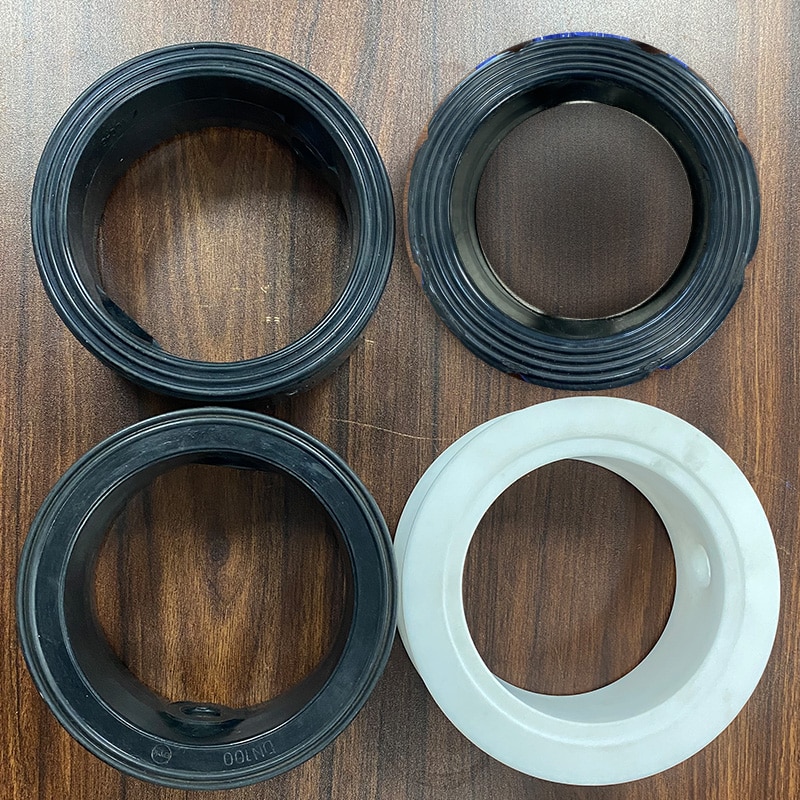
Standard rubber-seated or PTFE-seated butterfly valves cannot withstand steam temperatures and will fail quickly.
Does a butterfly valve have a required installation flow direction?
A: In most cases, a butterfly valve is not strictly directional.
However, for longer service life, it’s best to align the medium’s flow direction with the arrow marked on the valve body. This helps reduce wear on the seat and minimizes erosion of the sealing surfaces.
Conclusion
Butterfly valves are widely used in water treatment, municipal pipelines, industrial systems, HVAC networks, fire protection, and marine applications for a reason. They offer a practical balance of cost, simplicity, and reliability—meeting today’s engineering demands for both efficiency and stability. Whether used for shut-off, throttling, or handling large-volume flow, a properly selected butterfly valve can deliver exceptional performance and long-term value.
If you’re looking for dependable, high-quality butterfly valve solutions for your next project, TFW Valve is a partner you can trust. With rigorous manufacturing standards, a comprehensive quality control system, and deep expertise in water-related applications, we deliver a full range of butterfly valve designs, materials, and sizes that meet international standards.
Feel free to reach out to our team at any time—we’re here to support your project with professional guidance and reliable products.